

Table of Contents
You downloaded the app, found a club you liked, hit “Join” — and hit a wall. Apparently you need an agent to get in. What is that? Some kind of middleman? A salesperson? Is this sketchy?
If that’s where you’re at, this article is for you. No fluff, no sales pitch — just a clear explanation of how this system works and why it’s set up this way.
Why You Can’t Just Sign Up Directly
Traditional poker sites — PokerStars, 888poker, GGPoker’s main platform — work like any normal online service. You register, verify your identity, deposit through a payment processor, and you’re at the tables. The platform handles everything end-to-end.
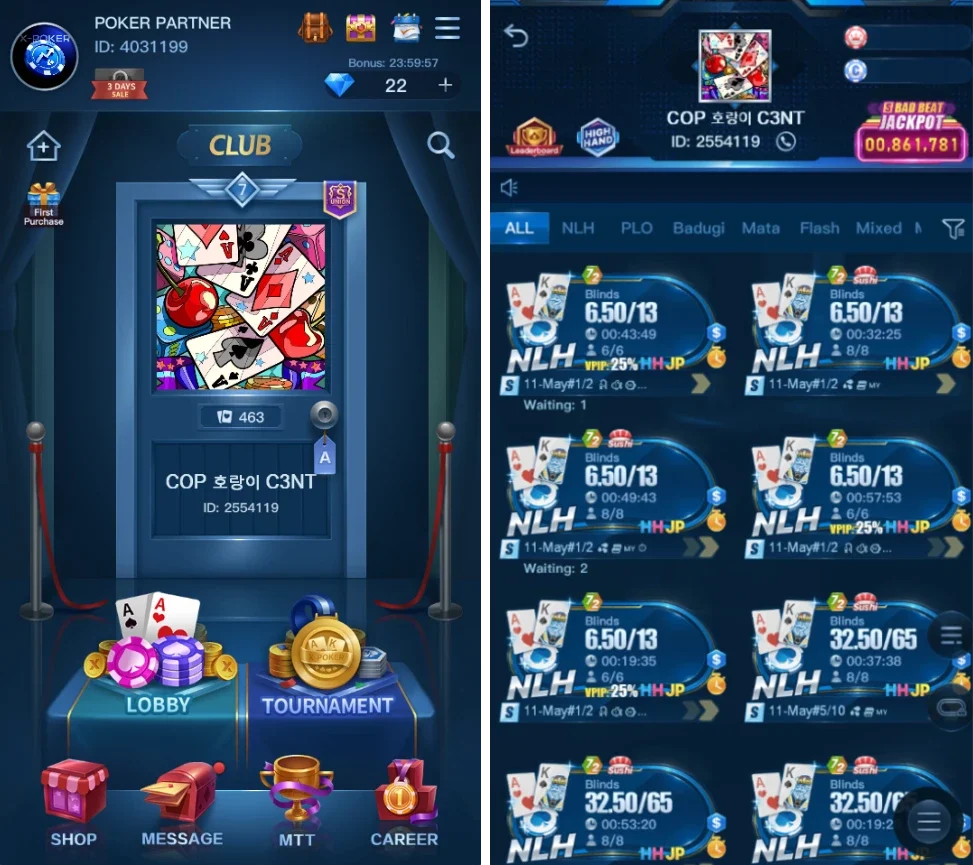
Club poker apps — PPPoker, GGClub, X-Poker, PokerBros, Suprema Poker — are built on a fundamentally different model. These platforms aren’t casinos in the traditional sense. Think of them more like software that lets private groups create their own invite-only poker rooms. Each club is a self-contained community with its own player pool, stakes, and rules. You can’t just walk in off the street.
That’s where agents come in. They’re the people who actually run those clubs on the ground level — and your only way through the door.

The Three-Layer System: Platform → Union → Agent
Before anything else makes sense, you need to understand the basic hierarchy. Think of it like a franchise model:
| Layer | Who It Is | What They Do |
|---|---|---|
| Platform | PPPoker, GGClub, X-Poker | Provides the software infrastructure |
| Union / League | A group of clubs | Sets shared rules, manages multiple clubs under one umbrella |
| Club + Agent | The actual poker community and its rep | Handles players: access, money, support |
An agent is a partner of a specific club or union — not an employee of the platform itself. The platform knows the agents; agents know their players. That chain of accountability is important when it comes to understanding how money and responsibility flow through the system.
So What Exactly Is a Poker Agent?
A poker agent (sometimes called an affiliate) is an independent representative of a poker club. They’re the human layer between you and the club — handling your access, your funds, and your support.
They’re not on the PPPoker or GGClub payroll. They’re more like independent contractors who’ve partnered with one or more clubs to bring in and manage players.
The closest real-world comparison: think of a private banking relationship manager. The bank (the club) exists independently, but your personal manager is the one who opens your account, explains the terms, handles your transactions, and steps in when something goes wrong. You don’t call the bank’s main line — you call your guy.
What Does an Agent Actually Do?
The role is broader than most new players expect. Here’s what a proper agent handles:
Getting You Into a Club
This is the most obvious function — and the one that makes the whole system make sense. Without an agent, you simply don’t have a club ID or an invitation. A good agent will:
- Give you the club’s unique ID and walk you through joining in the app
- Help you get set up properly, including any additional software if you’re playing on desktop (HUDs, tracking tools, etc.)
- Match you to the right club based on your stakes, preferred format (NLH, PLO), and when you like to play

That last point is underrated. An experienced agent who works with multiple clubs knows which ones have soft lineups right now, which time zones are most active, and where your specific stake level runs the most regularly. That’s not just admin work — it’s genuinely useful intel.
Handling Your Money: Deposits and Cashouts
This is where things get unfamiliar for players coming from regulated sites, so it’s worth explaining clearly.
Apps like PPPoker and GGClub use virtual chips, not real-money accounts on the platform side. The platform itself isn’t a licensed gambling operator and doesn’t process financial transactions. All the actual money movement happens directly between you and your agent — peer-to-peer.
Here’s how it works in practice:
- You agree on a deposit amount with your agent.
- You send the funds via one of the accepted methods — bank transfer, crypto, or e-wallet, depending on what your agent supports.
- Your agent credits the equivalent in chips to your club account.
- When you want to cash out, the process reverses: the agent buys your chips back and sends you the money.
Turnaround with a reliable agent is typically anywhere from a few minutes to a few hours. The key thing to understand: because cashouts go through your agent rather than the app itself, their reputation is your financial safety net.
Dispute Resolution and Ongoing Support
If something goes wrong — a hand dispute, a technical glitch, a question about your rakeback — your agent is your advocate with the club. They know the club’s rules from the inside and have the relationships to actually get things resolved.
Good agents are reachable via Telegram and respond within a few hours. If you have to wait a day to hear back, that’s a red flag worth taking seriously.
Finding You the Right Game
Every club has a different player pool. Some run heavy on recreational players from Southeast Asia. Others attract regulars from Europe or the US. Some are high-stakes, others are micro and low. An agent who works across multiple clubs and unions can steer you toward the most profitable games for your style — which is a real edge that you don’t get just by finding a random club ID online.
How Does the Agent Make Money? (And Why That Matters to You)
Fair question — and worth understanding, because it actually explains why a good agent is motivated to take care of you.
Every hand you play generates rake — the small percentage the club takes from each pot. That’s the fundamental revenue model. The club shares a portion of that rake with agents who bring in and retain active players. That share is called the agent’s rakeback deal.
What this means in practice: a good agent wants you to play regularly, enjoy the experience, and stick around. The more active you are, the more they earn. So there’s a natural alignment of interests.
Because of this, most agents pass some of their rakeback back to players in the form of extra cashback, bonuses, or better conditions. It’s not generosity — it’s straightforward business logic. An agent who keeps you happy keeps you playing.
Is It Safe to Send Money to an Agent?
Let’s be honest about this, because it’s the first thing most players coming from PokerStars are going to wonder.
Yes — your money passes through a private individual, not a regulated payment processor. That’s different from what you’re used to, and it does carry some inherent risk. No point pretending otherwise.
But here’s the context: this is the standard model for the entire club poker segment. Millions of players worldwide operate this way every day. The system has been running for years across PPPoker, PokerBros, and similar platforms. It’s not a workaround — it’s the architecture.
The risk is managed through reputation. In this space, agents aren’t anonymous. They operate under real names, public social profiles, and community reviews. Scamming even one player means your reputation is gone — and with it, your entire business. The incentive structure works against fraud.
What Protects Your Money
A few things reinforce the safety of the system:
- Reputation is everything. Established agents have months or years of verifiable history, public reviews, and transparent track records.
- The club has skin in the game too. Clubs want trustworthy agents — if their reps are burning players, the club loses players. That pressure keeps agents accountable.
- Start small. The simplest protection: test with a small deposit, cash it out, confirm the process works — then play with bigger amounts.
How to Vet an Agent Before You Commit
Before you send anything, run through this checklist:
- Track record — Have they been operating for at least 6–12 months? Do they have a public website or Telegram channel you can verify?
- Reviews — Search for them on poker forums (2+2, Reddit poker communities, or regional equivalents). Real players leave real feedback.
- Response time — Message them. If they take 24 hours to reply before you’re even a client, it won’t get better after.
- Upfront clarity — A legit agent will explain their rakeback rate, any fees, and cashout timelines before you deposit. If they’re vague, move on.
- Small test first — Deposit a modest amount, play a bit, and request a cashout. Confirm the money actually arrives before going in deeper.
What Does Your Agent Know About Your Play?
People rarely ask this directly, but it’s something a lot of players quietly wonder about: does my agent see how much I’m winning or losing?
The honest answer: partially. Your agent can typically see aggregate activity on your account — total rake generated, how often you’re playing, chip balance movement. They need this data to calculate your rakeback. They don’t see your individual hands, hole cards, or session-by-session results — that information stays at the platform level.
As far as other players at your table are concerned, you’re completely anonymous. Nobody at the table knows who your agent is or what your overall results look like.
One more thing worth knowing: switching agents is possible, but it usually means switching clubs. Your account is tied to the specific club your agent added you to. If that matters to you, think it through before you commit to a club.
The Short Version
Strip everything back and an agent in club poker does three things:
| Function | What It Means for You |
|---|---|
| Gets you in | Provides your club ID and invitation — without this, there’s no access |
| Handles the money | Processes deposits and cashouts, converts chips to cash and back |
| Has your back | Advocates for you with the club when issues come up |
There’s no version of this ecosystem that works without agents. It’s not a quirk of one particular platform — it’s the foundational architecture of private club poker.
A good agent isn’t just a gatekeeper. They’re someone with a direct financial interest in your experience being smooth, fair, and worth coming back to. When you find the right one, it shows.
Interested in learning about partnership terms? Get in touch.
FAQ
Why do I need an agent to play in PPPoker or GGClub? These apps are built around private, invite-only communities — not public poker rooms. There’s no public registration. An agent provides your club access, handles deposits and withdrawals, and supports you throughout. Without one, you simply can’t get in.
Is the agent employed by the platform? No. Agents are independent partners of specific clubs or unions. PPPoker, GGClub, and X-Poker provide the software infrastructure — agents operate on top of that as their own businesses.
How does the agent make money? Agents earn a share of the rake generated by their players. The more active their player base, the more they earn. This is why most agents return part of that to players as rakeback or bonuses — it keeps players active and loyal.
Is it really safe to send money to an agent? It’s the standard model for the entire club poker industry, used by millions of players globally. The risk isn’t zero, but it’s managed through reputation — established agents have too much to lose from any single bad act. Always start with a small test deposit before going in with significant funds.
Can I switch agents if I’m unhappy? You can, but it typically means moving to a different club, since your account is tied to where your original agent placed you. This is worth thinking about before you commit to a club.
What’s the difference between an agent and a club manager? A club manager is an internal role within the club itself — they manage the club’s settings and structure. An agent is an external partner who recruits and manages players, handles their finances, and provides support.
Can my agent see my cards or session results? No. Agents see aggregate data: total rake, playing frequency, and chip balance. They don’t have access to individual hands or hole cards. Your results are not visible to other players at the table.
Read also
Poker Outs and Odds 2026: What They Are, How to Count Them, and How to Use Them at the Table
X-Poker Full Review in 2026: Download App, Find the Best Clubs & Join
How to Play Multiway Pots in Poker: Strategy, Logic, and Real Examples